 Porsche
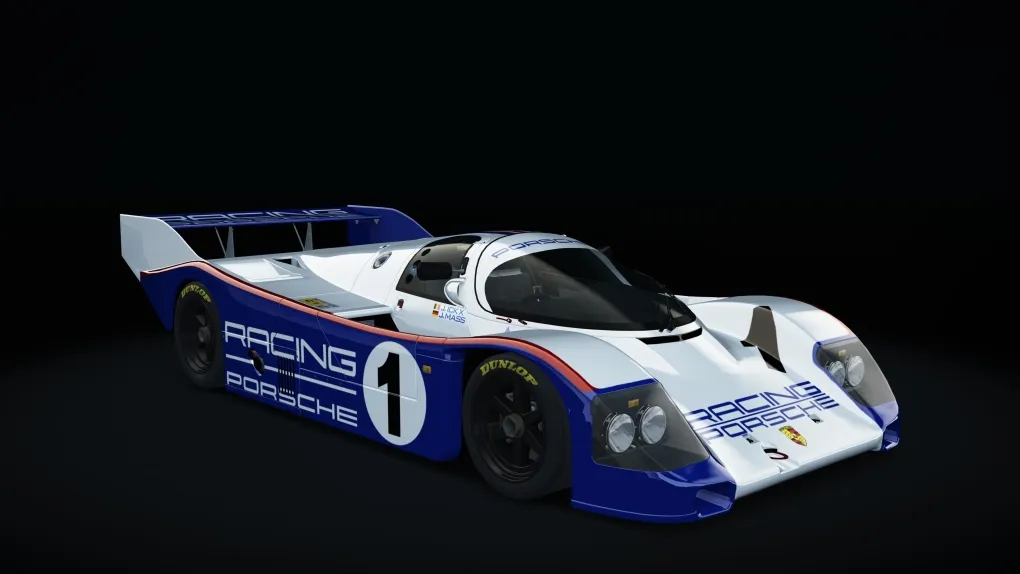
 962 C Short Tail
First developed in 1984 for use in the USA, from 1985 the Porsche 962 C continued the successful global motorsport story begun by its predecessor model, the 956, in 1982. Porsche undertook pioneering work in developing these race cars, adapting the aerodynamic ground-effect used in Formula 1 to the new race cars. Wing profiles in the sidepods and diffusers in the underbody produced a vacuum that 'sucked' the car to the track surface during driving, resulting in extreme cornering speeds. The 956 and 962 C had aluminium monocoques that were around 80% stiffer than the tubular space frame of their predecessors. As the rules limited fuel consumption, Porsche used ground-breaking injection and ignition systems. Some of the differences between the 962 C and the 956 were a longer wheelbase, narrower tyres and increased weight (minimum weight of 850 instead of 800 kilograms), along with further improved aerodynamics. Initially fitted with a 2.65-litre twin-turbo engine, the 962 C was first powered by a fully water-cooled three-litre twin-turbo engine producing up to 700 hp during practice at Le Mans in 1985. The 962 C won Le Mans in 1986, 1987 and 1994, following the 956's unbeaten run in